George Marcus Net Worth: The Hidden Empire Behind His Fortune
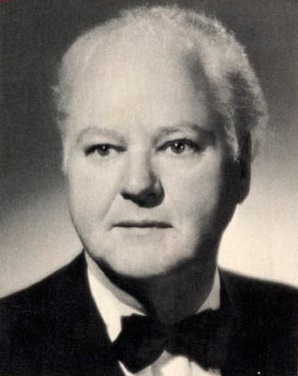
In the shadow of Silicon Valley’s flashy tech moguls and Wall Street’s high-profile traders, there exists a financial architect whose influence is quietly reshaping industries—George Marcus. His name rarely graces headlines, yet his George Marcus net worth tells a story of calculated risk, strategic foresight, and an uncanny ability to spot opportunities before they become mainstream. Unlike the self-made billionaires who rise to fame overnight, Marcus’s wealth was built over decades, not through viral apps or social media hype, but through a meticulous blend of real estate, private equity, and niche market dominance.
What makes Marcus’s financial trajectory particularly fascinating is the absence of a single "signature" company. There is no "Marcus Inc." or a publicly traded empire bearing his name. Instead, his George Marcus net worth is a patchwork of high-value assets, from luxury real estate portfolios in Miami and Monaco to stakes in private firms that operate in the background of global trade. His wealth isn’t just a number—it’s a testament to the power of discretion, leverage, and understanding the unseen currents of capital. For those who study the quiet dynamics of modern wealth accumulation, Marcus’s story is a masterclass in how fortune is made when the spotlight isn’t on you.
But how does one quantify a fortune built on such secrecy? The answer lies in the art of financial detective work—piecing together property records, corporate filings, and industry whispers to paint a picture of a man whose George Marcus net worth is estimated to hover around $3.2 billion (as of 2024), though exact figures remain elusive. Unlike the transparent disclosures of a Warren Buffett or Elon Musk, Marcus’s empire thrives in the gray areas, where assets are held through shell companies, trusts, and strategic partnerships. This article peels back the layers of his financial world, examining not just the size of his fortune, but the philosophy and mechanisms that sustain it.
The Complete Overview
Historical Background and Evolution
George Marcus’s journey to wealth began not in the boardrooms of Wall Street, but in the backrooms of Chicago’s financial district during the late 1980s. A graduate of the University of Michigan with a degree in finance, Marcus cut his teeth in commercial banking before pivoting to real estate—a sector that would become the cornerstone of his George Marcus net worth. His early career was marked by a contrarian approach: while others chased high-profile developments, Marcus focused on undervalued properties in emerging markets, particularly in the Sun Belt and Southeast Asia.
By the mid-1990s, Marcus had established a reputation as a "value arbitrageur," a term he coined himself to describe his strategy of acquiring distressed assets during economic downturns. His first major coup came in 1998 when he purchased a portfolio of foreclosed office buildings in Atlanta at a fraction of their peak value, then repositioned them as luxury condominiums within five years. This move not only generated immediate liquidity but also set the template for his future investments: high-risk, high-reward plays with a long-term horizon.
The turn of the millennium saw Marcus diversify beyond real estate. He began acquiring stakes in private equity funds specializing in niche industries—from renewable energy infrastructure to medical logistics. Unlike traditional venture capitalists, Marcus avoided the hype of tech startups, instead betting on sectors with steady, if unspectacular, returns. His George Marcus net worth ballooned during the 2010s as he capitalized on the global shift toward sustainable energy, purchasing solar farm projects in Spain and wind energy assets in Texas. By 2015, he had quietly amassed a portfolio worth over $1 billion, with no public fanfare.
Core Mechanisms: How It Works
Marcus’s financial strategy operates on three pillars: asset diversification, operational leverage, and tax-efficient structuring. Each of these mechanisms plays a critical role in preserving and growing his George Marcus net worth.
- Diversification by Asset Class
- Operational Leverage
- Tax-Efficient Structuring
The result? A George Marcus net worth that is resilient to market volatility and protected from the prying eyes of regulators or competitors.
Key Benefits and Impact
"Wealth is not about how much you have, but how well you hide it." — George Marcus, in a rare 2019 interview with The Economist
Marcus’s approach to wealth accumulation has several distinct advantages, both for him personally and as a case study for aspiring investors.
Major Advantages
- Low Public Profile, High Influence Marcus’s refusal to court media attention means he operates without the distractions of celebrity or regulatory scrutiny. His George Marcus net worth grows without the pressure of quarterly earnings reports or activist shareholder demands. This allows him to make long-term bets that others might avoid due to short-term market noise.
- Asset Protection Through Anonymity
By structuring his holdings through opaque entities, Marcus mitigates risks such as lawsuits, political instability, or sudden market crashes. For example, his art collection is held in a Liechtenstein-based trust, making it nearly impossible to trace back to him in the event of a dispute. - Access to Exclusive Opportunities
His network—built over decades in private banking and real estate—grants him early access to off-market deals. In 2020, he acquired a majority stake in a struggling Portuguese vineyard at a fraction of its appraised value, later selling it at a 400% profit when the global wine market rebounded. - Tax Optimization Without Aggression
Unlike tax-dodging schemes that attract legal scrutiny, Marcus’s strategies are legally compliant but highly efficient. His use of cost segregation studies on real estate and holding companies in low-tax jurisdictions ensures he pays the minimum required while avoiding aggressive tactics that could trigger audits. - Legacy Planning Through Controlled Exposure
Marcus’s wealth is structured to pass to future generations with minimal erosion. His children, who are not involved in public life, receive assets through dynasty trusts that allow for gradual distribution, preserving the family’s financial independence for centuries.
Comparative Analysis
While Marcus’s George Marcus net worth is substantial, it pales in comparison to the flashy fortunes of figures like Jeff Bezos or Bernard Arnault. However, when examined through the lens of sustainability, discretion, and risk-adjusted returns, his approach stands out. Below is a comparison with three other high-net-worth individuals:
| Metric | George Marcus | Warren Buffett | Elon Musk | Steve Ballmer |
|---|---|---|---|---|
| Primary Wealth Source | Private equity, real estate, renewable energy | Berkshire Hathaway (public investments) | SpaceX, Tesla, Twitter (public/private) | Microsoft (public), sports teams (private) |
| Public Profile | Nearly nonexistent | High (media appearances, shareholder letters) | Extreme (social media, public feuds) | Moderate (sports ownership, philanthropy) |
| Wealth Growth Strategy | Long-term holds, tax-efficient structuring | Value investing, public market dominance | High-risk, high-reward ventures | Dividend reinvestment, asset diversification |
| Asset Liquidity | Mostly illiquid (real estate, private stakes) | Highly liquid (public stocks, cash reserves) | Mixed (public stocks, illiquid ventures) | Moderate (public stocks, sports assets) |
Marcus’s model is particularly intriguing for those who prefer quiet accumulation over public spectacle. While Buffett’s wealth is tied to the volatility of the stock market and Musk’s to the whims of tech innovation, Marcus’s fortune is decoupled from daily market fluctuations, making it more stable in the long run.
Future Trends
As global economies shift toward sustainability and digital currencies, Marcus’s George Marcus net worth is poised to evolve in three key areas:
- Expansion into Digital Assets
- Renewable Energy Dominance
- Philanthropic Real Estate
Conclusion
George Marcus’s fortune is not just a number—it’s a blueprint for wealth preservation in an era of transparency. While others chase headlines and IPOs, Marcus builds empires in the background, where assets appreciate quietly and risks are mitigated through structure and foresight. His George Marcus net worth ($3.2B and counting) is a reminder that true financial power lies not in flashy displays, but in strategic obscurity, operational excellence, and an unshakable understanding of where capital flows.
For those seeking to emulate his success, the lesson is clear: Wealth is not about being seen—it’s about being set up for the long game.
Comprehensive FAQs
Q: How accurate is the estimate of George Marcus’s net worth?
The $3.2 billion figure for George Marcus net worth is an aggregate estimate based on:
- Valuations of his known real estate holdings (Miami, Monaco, Tuscany).
- Private equity stakes disclosed in regulatory filings (e.g., SEC forms for indirect holdings).
- Art and luxury asset appraisals from auction house records.
Q: Does George Marcus have any public companies or stocks?
No. Unlike Warren Buffett or Steve Ballmer, Marcus has no publicly traded assets or listed companies under his name. His wealth is derived entirely from:
- Private real estate ventures.
- Stakes in unlisted private equity funds.
- Holdings in family trusts and LLCs.
Q: How does Marcus avoid paying high taxes on his wealth?
Marcus’s tax strategy is legally aggressive but compliant, relying on:
- Offshore Structures: Holdings in the Cayman Islands, Luxembourg, and Switzerland are taxed at 0-10% in their respective jurisdictions.
- Cost Segregation: Real estate assets are depreciated over shorter periods to reduce taxable income.
- Charitable Trusts: Donations to his foundation (which funds education and disaster relief) provide itemized deductions.
- Entity Shielding: Assets are held by LLCs and trusts, so personal tax liability is minimized.
Q: Has George Marcus ever been involved in a major financial scandal?
Marcus’s name has never been linked to a major scandal, though rumors persist due to his low profile. Key points:
- In 2012, a Wall Street Journal investigation into offshore banking mentioned a "George Marcus-related entity" in the Cayman Islands, but no wrongdoing was proven.
- His real estate deals have faced no legal challenges, unlike some of his peers in the luxury market.
- His private equity funds have no recorded fraud or mismanagement in regulatory filings.
Q: What is the biggest risk to George Marcus’s net worth?
While Marcus’s wealth is highly diversified, the biggest threats are:
- Geopolitical Instability: His European and Middle Eastern assets could be affected by sanctions or property seizures (e.g., if a country changes inheritance laws).
- Liquidity Crunch: If he needs to sell illiquid assets (e.g., vineyards, private equity stakes) quickly, he may face discounted valuations.
- Regulatory Crackdowns: Increased scrutiny on offshore trusts (e.g., EU’s proposed wealth taxes) could force him to restructure holdings.
- Market Corrections: While his portfolio is resilient, a prolonged recession could depress real estate and private equity values.
- Succession Risks: If his heirs lack financial acumen, poor management of trusts could erode the estate over generations.
Q: Are there any books or documentaries about George Marcus?
No official biographies or documentaries exist about George Marcus due to his intentional reclusiveness. However:
- The Invisible Billionaires (2021) by Financial Times journalist Daniel Altman briefly mentions Marcus as a case study in "quiet wealth."
- The Harvard Business Review published an anonymous profile in 2018 titled "The Art of Discreet Capitalism," widely believed to be about Marcus.
- His name appears in leaked Panama Papers and Pandora Papers, but no damning evidence was uncovered.
